
The Abacus: History, Uses, and Benefits of This Ancient Counting Tool
The Abacus: History, Uses, and Benefits of This Ancient Counting Tool
 Vcare Staff
 The Abacus: An Ancient Tool with Modern Relevance
Introduction
The abacus is one of the oldest calculating tools known to humankind. Despite the advancement of modern technology, it remains an effective learning tool for mental arithmetic and cognitive development. Used for centuries across different cultures, the abacus continues to help students and professionals alike in performing quick calculations. In this blog, we will explore its history, uses, and benefits.
History of the Abacus
The origins of the abacus date back to ancient civilizations, including Mesopotamia, Egypt, Greece, China, and Rome. The first versions were simple counting boards, but over time, they evolved into structured bead-based designs. The Chinese Suanpan, the Japanese Soroban, and the Russian Schoty are some of the most well-known variations of the abacus, each with unique configurations tailored to their respective cultures.
How Does an Abacus Work?
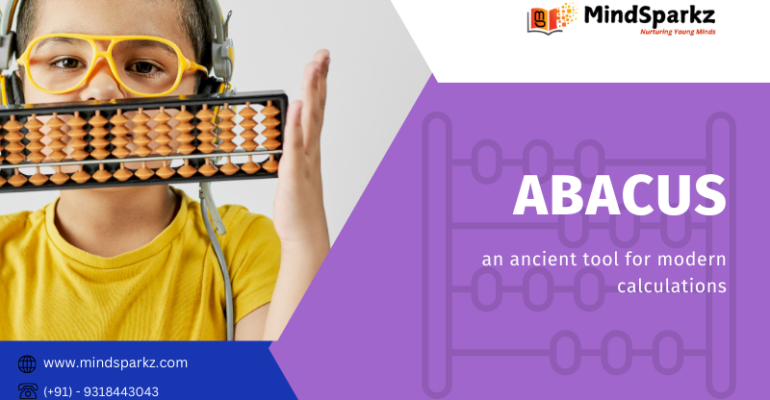
The abacus consists of a rectangular frame with rods and movable beads. Each rod represents a place value (units, tens, hundreds, etc.), and the beads are moved to perform arithmetic calculations such as addition, subtraction, multiplication, and division. With proper training, users can visualize and manipulate numbers mentally, making calculations faster and more accurate.
Uses of the Abacus
The abacus is widely used for:
- Education: Teaching children basic arithmetic and improving numerical understanding.
- Mental Math Training: Enhancing speed and accuracy in mathematical calculations.
- Brain Development: Stimulating both the left and right hemispheres of the brain.
- Accounting and Business: Traditional merchants and accountants still use it in some parts of the world.
Benefits of Learning the Abacus
1. Improves Concentration & Focus
Learning the abacus requires attention to detail and mental discipline, which enhances focus in students.
2. Enhances Memory & Cognitive Skills
Regular practice strengthens memory retention and sharpens problem-solving abilities.
3. Develops Faster Mental Arithmetic
With consistent use, abacus learners can perform calculations mentally, improving speed and accuracy.
4. Boosts Confidence in Mathematics
Children who struggle with numbers often find renewed confidence through abacus training.
5. Encourages Logical Thinking
The process of calculating with an abacus improves logical reasoning and analytical skills.
Is the Abacus Still Relevant Today?
Despite the availability of calculators and digital tools, the abacus remains a valuable learning tool in many educational programs. Schools in countries like China, Japan, and India still incorporate abacus training into their curriculum. Additionally, it serves as a foundation for developing mental math skills, which can be beneficial in professional fields such as finance, engineering, and data science.
Conclusion
The abacus is much more than a historical relic—it is a powerful tool that continues to aid learning and cognitive development. Whether for students, professionals, or enthusiasts of mental math, mastering the abacus can enhance numerical skills and overall brain function. As we embrace modern technology, the abacus reminds us of the timeless value of fundamental mathematical techniques.
Do you use or plan to learn the abacus?


